
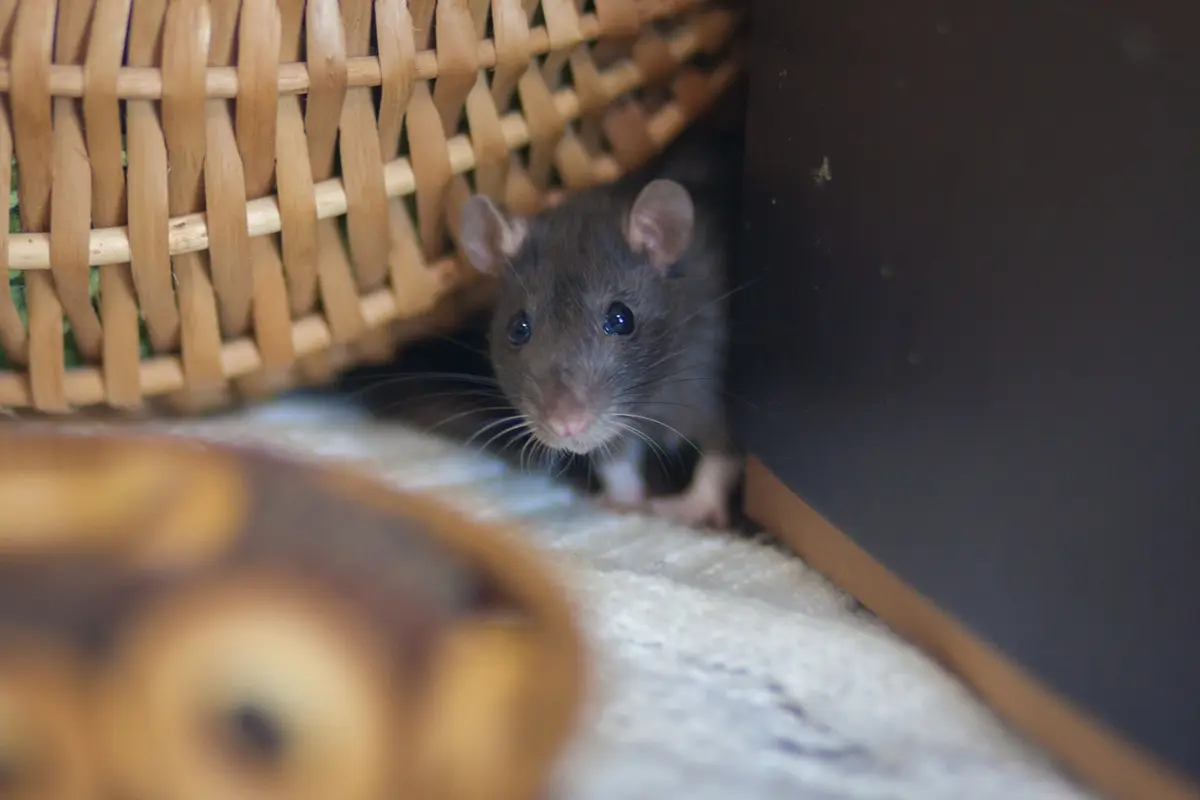
How to tell if you have mice in your home? Look for rice-sized droppings in cabinets, scratching at night in walls, a sharp ammonia-like smell, rub marks, and fresh gnawing near food and entry points. Confirm with a flashlight along baseboards and inside cabinets. Do not sweep droppings dry. Spray with disinfectant, let it soak, wipe, and bag the waste.
How Do You Know if You Have Mice?
Mice are active at night and often hide in tight spaces, so they may be difficult to spot. Most homeowners find the signs before they ever see a mouse. Start in the kitchen, pantry, laundry room, and garage. Then check the exterior around doors, vents, and utility lines. Look for droppings, gnaw marks, rub marks, nests, and signs of moisture. House mice also leave tracks, dirty rub areas along baseboards, and damaged food packages.
Do not stop at the walls of the house. Check outdoor furniture, especially furniture with cushions, storage benches, and rarely used seating areas. Rodents can start nesting in protected outdoor spots before moving closer to the structure.
If your home borders native desert, open land, or a more rural area, the chance of wild mice goes up. In Arizona, homes near native habitat can see more pressure from field mice and other wild rodents, not just house mice.
Praying Mantis tip: Check entrances first. Look for droppings, urine staining, and debris that looks chewed. We can assess entry points, seal them, and set a plan to keep mice away from your home and family.
Signs of a Rat or Mouse Infestation
Rodent droppings
Fresh mouse droppings are dark and moist; older droppings turn gray and crumble. Common spots include pantry corners, drawers, under sinks, behind appliances, and along walls. Spray with disinfectant or a fresh bleach solution, let it soak, then wipe and bag. Do not sweep or vacuum droppings when dry.
Gnaw marks
Rodents gnaw to keep their teeth short. New chew marks look light in color; older marks darken over time. Check food boxes, door corners, baseboards, soft plastics, and wiring. Chewed wires are a fire risk.
Odd pet behavior
Dogs and cats often notice activity before people do. Watch for staring, sniffing, scratching, or pawing at a specific baseboard, appliance, cabinet, or outdoor seating area. Pets often lock onto active routes and hidden nesting spots.
Tracks and runways
Rodents reuse the same paths. Look for rub smudges, fine debris, and tiny prints along walls and around appliances. Lightly dust suspected areas with a thin layer of flour at night to confirm traffic. A blacklight can help reveal urine on active routes, but use it to confirm what you already suspect, not as your only test. Clean with disinfectant after inspection.
Nests
Nests are made of shredded paper, fabric, insulation, or plant fibers. They often sit close to food and water, behind kick plates, inside wall voids, in stored boxes, under outdoor furniture, or around protected exterior clutter.
Scratching noises
Night scurrying in walls, ceilings, or under floors is common. Daytime movement can point to a larger population. If you hear activity in the attic or garage and also see droppings outside, the problem may be spreading between indoor and outdoor harborage.
Urine pools
Rodents mark as they travel. You may find small urine spots or gritty mounds where dust and urine combine. A blacklight can reveal fresh travel lines in limited areas. Clean with disinfectant after inspection.
Ammonia odor
A stale ammonia-like smell in pantries, utility rooms, or closets can signal active activity. A sharp, pungent, dead animal odor suggests a carcass in a void, which needs safe removal.
Allergic reactions
Rodent waste can aggravate allergies and asthma. Reduce reservoirs by removing clutter and cleaning correctly.
Outdoor Harborage and Burrows
Walk the perimeter in Prescott, Prescott Valley, Chino Valley, and Dewey Humboldt, where dense vegetation and stacked items near foundations are common pressure points. Look for debris piles, stacked firewood, plant litter against walls, outdoor furniture that is rarely moved, and soil disturbance.
Large rocks and boulders deserve extra attention. In central Arizona, pack rats often build nests at the base of cactus plants, shrubs, or rock outcroppings. Check between large surface boulders and at the entrance of those areas for droppings, nesting debris, or chew activity.
Norway rats are different. They are burrowing rodents that usually build burrows along foundations, beneath rubbish or woodpiles, and around gardens and fields. If you see smooth-sided burrow openings with loose soil nearby, inspect those areas closely and treat the rodent issue before sealing the opening.
Determining Rodent Infestation Size
Night-only signs often indicate a smaller population that can be managed with sealing and traps. Daytime sightings, numerous fresh droppings, and new gnawing in several rooms indicate a larger population that requires a professional program. If you are finding signs inside and outside at the same time, the population is usually more established.
Identifying Mice vs. Rats
- Mice are small with rice-sized, pointed droppings. They are curious and often approach new traps quickly.
- Rats are larger with bigger droppings. Norway rat droppings are blunt; roof rat droppings are pointed. Norway rats usually stay lower and burrow near the ground. Roof rats are agile climbers and often use shrubs, trees, fences, attics, and upper wall spaces. Pack rats are native rodents often associated with brush, cactus, and rock outcroppings rather than with classic indoor behavior.
How to Get Rid of a Mouse Infestation
1. Seal Entry Points
Mice can squeeze through openings about one-quarter inch in diameter. Rats can fit through openings about 1/2 inch in diameter. Add door sweeps. Repair screens. Seal around pipes and cables. Use rodent-resistant materials such as steel wool packed and locked in place with caulk, hardware cloth, metal flashing, or sheet metal. Foam alone is not enough.
2. Remove Food and Water
Store dry goods in sealed containers. Empty trash often and use tight lids. Fix leaks and dry sink mats. Clean pet bowls at night. These steps cut attractants and reduce travel.
3. Deploy Traps First
Place snap traps or covered stations along walls where droppings and rub marks show travel. For cautious rodents, pre-bait for a short time without setting, then set. Reset and relocate based on results.
4. Clean Safely
Ventilate, wear gloves, spray droppings and nests with disinfectant, let it soak, then wipe and place in a bag. Do not sweep or vacuum droppings when dry. Follow CDC cleanup guidance step by step.
Praying Mantis tip: We can inspect, seal entry points, and create a customized prevention plan tailored to your home and family.
Schedule Your Prescott Rodent Inspection Today
If you notice signs in more than one room or activity in the kitchen and utility areas at the same time, consider bringing in a professional. Our team will inspect, seal entry points, set traps, guide safe cleanup, and follow up until the activity is gone. If your home sits near native desert, rural property, boulder outcroppings, or heavy vegetation, that inspection matters even more because outside harborage often drives repeat activity inside.
Start with a professional pest control in Prescott. If you hear scratching in the attic or garage, consider our rodent control services for a targeted plan. Want a complete solution for homes, HOAs, and businesses explore all our services. Ready to book your inspection? Contact Praying Mantis or call 928-708-9800 today.
FAQs
What do mouse droppings look like?
Mouse droppings are tiny, dark pellets that resemble black or dark-brown grains of rice or sprinkles. They’re usually about ⅛–¼ inch (3–6 mm) long, cylindrical with pointed ends, and often scattered along walls, in cupboards, or under sinks. Fresh droppings are moist, shiny, and very dark; older ones dry out, become dull, and turn brown to gray over time.
Can a blacklight help me find rodent urine?
Yes. A blacklight can make rodent urine easier to spot on some surfaces and along travel routes. It is helpful for confirming suspected activity, but not every stain will show clearly, so use it as a helper, not your only inspection method.
What size holes can rodents use to enter?
Mice can squeeze through gaps as small as about ¼ inch, roughly the size of a dime, while rats can often get through holes around ½ inch, about the size of a quarter. That is why exclusion work focuses on sealing any opening larger than one-quarter inch with rodent-resistant materials.
How can I tell if the problem is getting bigger?
A rodent issue is likely growing if you are seeing more fresh droppings, stronger urine odor, new gnaw marks, or hearing frequent scratching at night. If those signs are spreading into new rooms or you start seeing activity during the day, the population is more established and it is time to escalate control.