
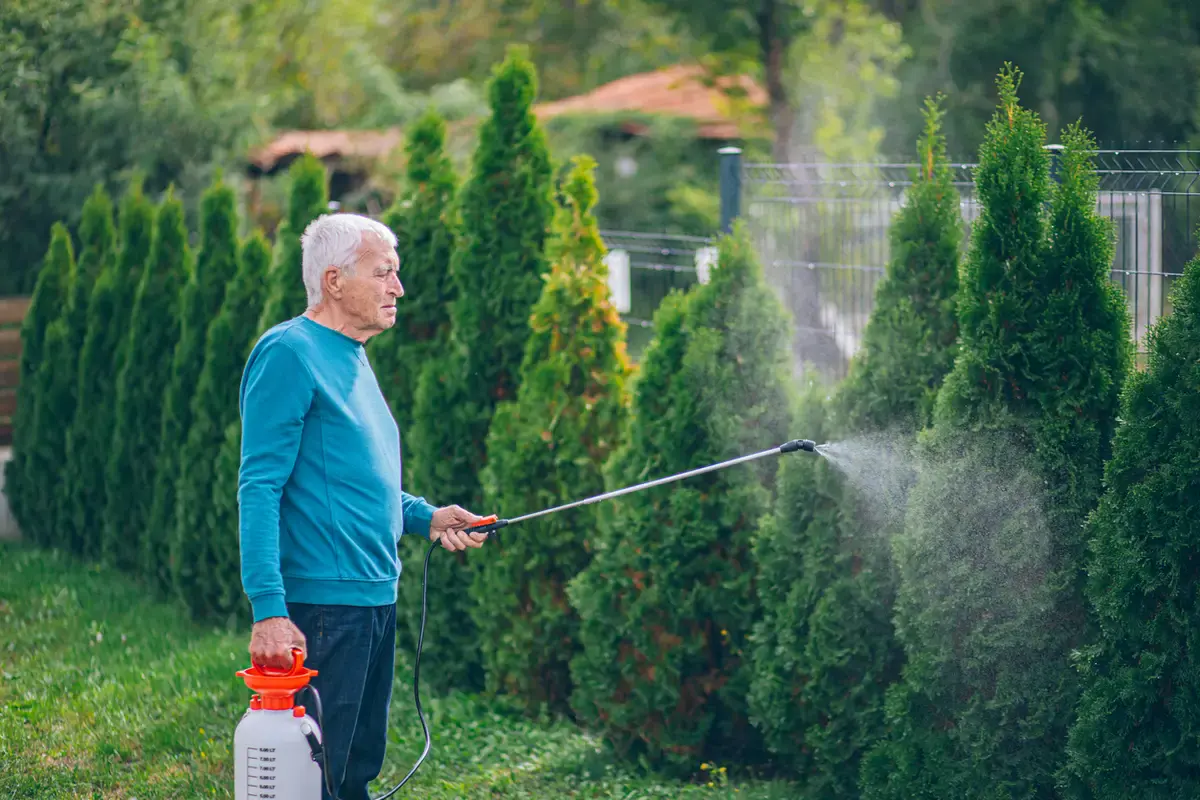
Chances are, you’ve been out walking through the neighborhood when you catch a chemical smell coming from the other side of the fence. Your neighbor is out spraying something in their yard, but it doesn’t look like any product you’ve seen before. It makes you wonder: Is that stuff even legal?
In Arizona’s high desert near Prescott, it’s not uncommon for homeowners to take weed and pest control into their own hands. But did you know some of the products people buy and use every day would actually get a licensed pest control provider fined or even stripped of their license? It’s true. And what might seem like harmless weed control can come with hidden consequences.
What Licensed Professionals Are Allowed to Use
Licensed pest control companies in Arizona operate under the authority of the Arizona Department of Agriculture’s Pest Management Division (PMD). The PMD sets strict rules about:
- What products can be used
- Where and how they’re applied
- When and by whom
Even familiar herbicides like glyphosate-based products (like Roundup) may be off-limits to pros depending on the formulation, application site, or label restrictions. Licensed pest applicators are trained to read and follow these labels exactly down to weather conditions, equipment type, and protective gear.
Where to Check What Could Risk a License
According to ARIZ. REV. STAT. § 3-3624, a licensed applicator can face serious consequences for:
- Applying pesticides inconsistently with the label
- Causing harm to humans, pets, or the environment
- Failing to follow any state or federal pesticide law
The state even publishes these standards in publicly accessible documents:
If a professional applies a banned or misused product even once it can lead to fines, suspension, or full license revocation.
Why Homeowners Aren’t Held to the Same Standards
Here’s the twist: many products that would get a licensed pro in trouble are still sold over the counter at hardware stores. As long as a homeowner follows the instructions (and isn’t applying commercially), they typically aren’t subject to the same oversight.
But that doesn’t mean it’s safe.
Just because something is legal to buy doesn’t mean it’s legal or smart to use in every situation. A poorly timed or misapplied treatment can drift into neighboring yards, seep into groundwater, or harm local pollinators. These are the exact risks that professionals are trained to prevent.
Environmental Risks in the High Desert
Prescott’s climate makes the misuse of herbicides especially risky:
- Dry soil increases absorption rate and volatility
- Wind drift can carry sprays onto native plants or into other yards
- Local runoff can carry residue to washes and natural areas
What looks like a simple spray job can actually put local wildlife, pets, and property at risk if done without proper guidance.
Safer Alternatives Through Licensed Control
At Praying Mantis Pest Control, we don’t just follow the rules we embrace them. Our team uses proven techniques to help keep weeds and pests at bay:
We work with the land not against it and that helps keep your home and neighborhood safe from over-application and unintentional damage.
What You Can Do
- Read product labels completely before using anything
- Avoid casual spraying with leftover or unmarked products
- Call a licensed provider like Praying Mantis Pest Control to inspect your yard
and recommend a safe, compliant treatment plan
Final Thoughts
If you’ve ever wondered whether that spray bottle in your neighbor’s hand is truly safe, you’re not alone. The line between what’s allowed and what’s regulated can be hard to see but for licensed professionals, it’s crystal clear.
When it comes to weed and pest control, it’s always better to play it safe. Contact Praying Mantis Pest Control to make sure your treatments are safe, legal, and right for the unique environment of Prescott’s high desert.